 Trellis Structures

I grew up working a hundred-acre tree farm in Rhode Island with my father, who spent his career as a sustainable forestry advocate before that framing existed. That background shapes how I think about wood as a material. When I took over Trellis Structures in 2022, I inherited a thirty-year-old craft business and a set of material convictions I've spent two years stress-testing.
So when the industry conversation keeps drifting toward PVC as the rational choice for custom garden structures, I want to push back. Not from sentiment. From fabrication experience and forestry science.
There is also something worth naming directly. Several of the brands that built reputations as New England woodworkers have quietly transitioned to manufacturing PVC and composite kits. That is a legitimate business decision. It also leaves a gap. A client who wants a handbuilt structure designed to their site, built by someone who understands wood as a living material, is not being served by a plastic extrusion shipped in a box. Those are different products. The industry has largely stopped saying so out loud, so I will.

The timber industry earned real scrutiny. Decades of irresponsible harvesting left visible damage, and the environmental response to that was appropriate. But the current narrative treating any mature timber harvest as inherently destructive has overshot the science.
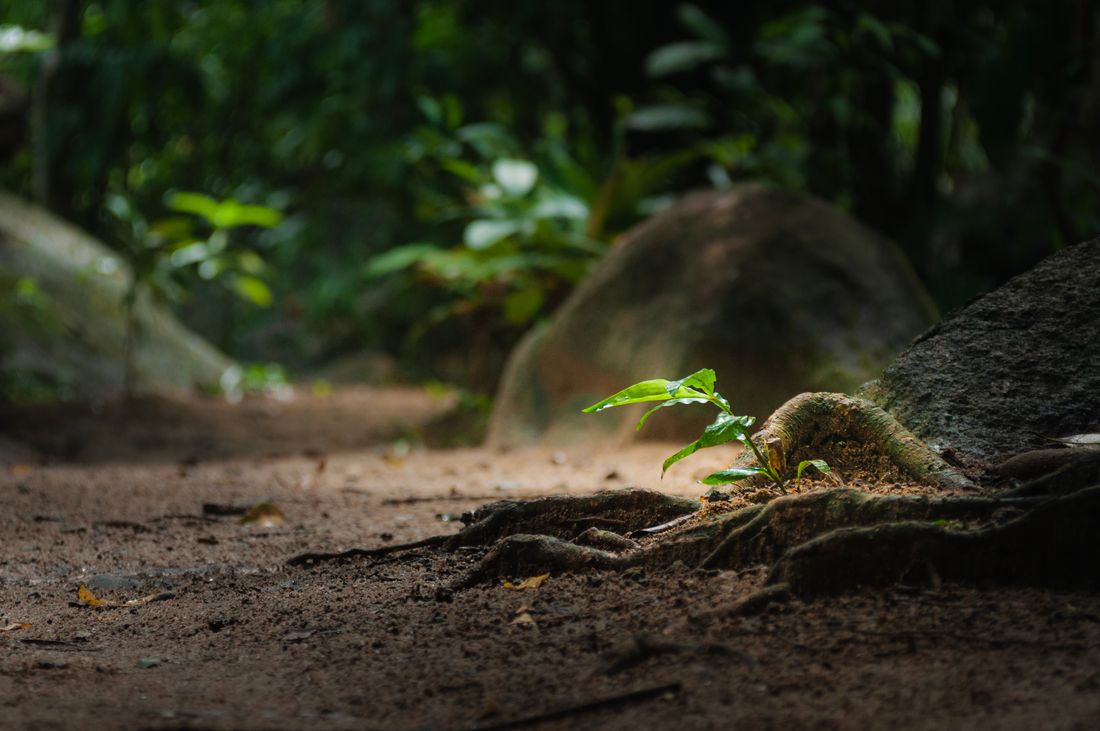
Forests are not static systems. Left unmanaged, a closed canopy chokes out its own understory, shades out new growth, and creates conditions that favor invasive species. This is observable ecology, not a controversial claim among foresters.
The carbon argument gets distorted too. Deadwood matters. It supports soil biology, fungal networks, and habitat that living canopy cannot provide alone. But selectively harvesting mature timber and building something designed to last thirty or forty years keeps that sequestered carbon out of the atmosphere for the structure's entire life.
Responsible selective forestry and industrial clear-cutting are not the same thing. The problem was never harvesting timber. It was how, where, and at what scale.
The outdoor structure industry has a habit of treating wood as a monolith and then comparing the worst examples of it against the best marketing claims of PVC. That framing is doing a lot of work it should not be.
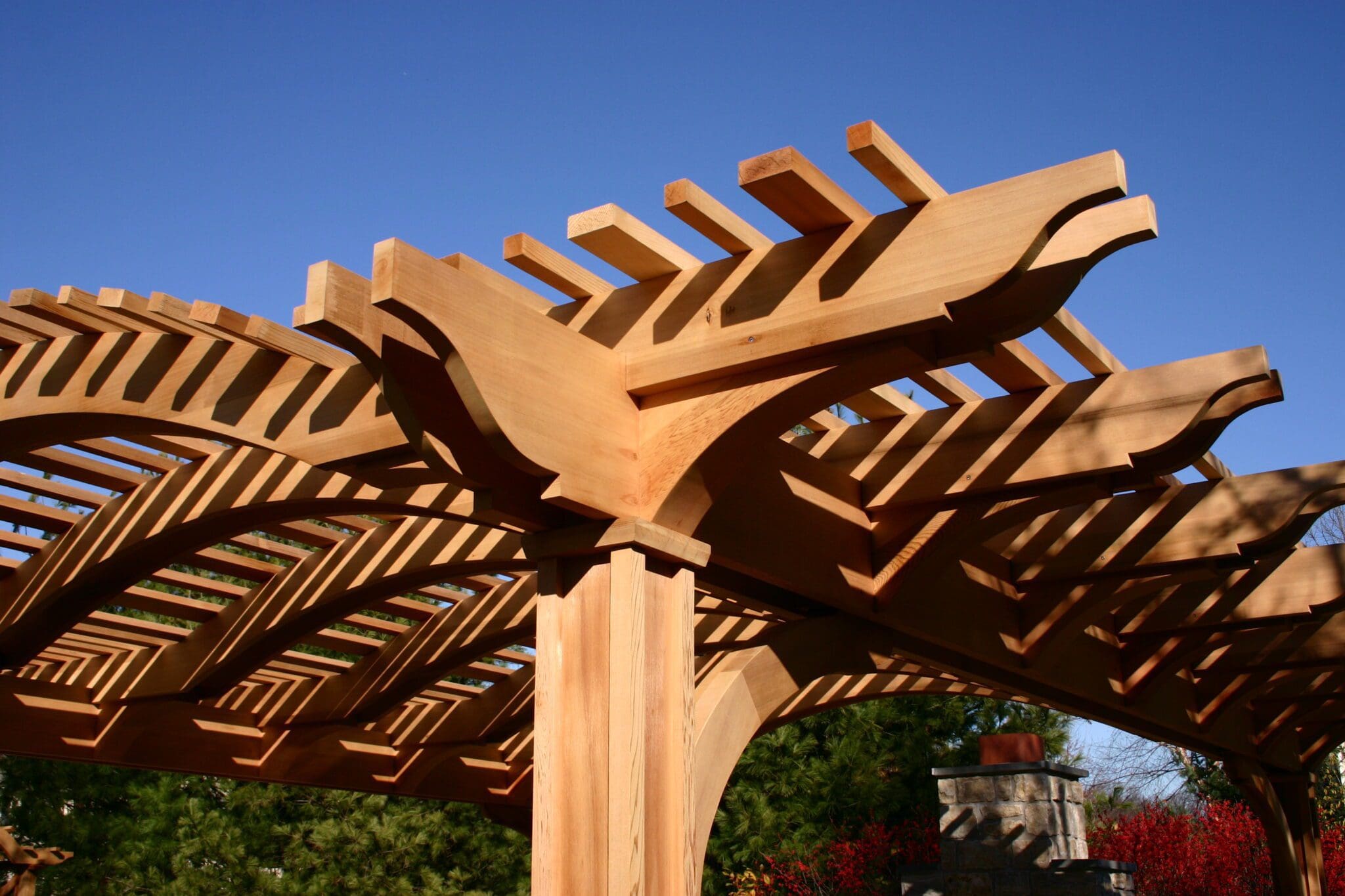
There is a family of species and treatments that are genuinely rot-resistant without any finish, chemical treatment, or ongoing maintenance. Cedar is our primary material, and for good reason. The natural oils in western red cedar, called thujaplicins, provide genuine rot resistance without intervention. Left unfinished, with proper drainage and no ground contact, a well-built cedar arbor or pergola will last twenty or more years and age into something better looking than it started. The weight-to-strength ratio also makes it ideal for the kind of detailed vertical architecture we build, from wall trellises to freestanding garden arches.
But cedar is not the only answer. Black locust is one of the most rot-resistant species on the continent, grows prolifically across the eastern US, and is dramatically underutilized by the industry. White oak's closed grain structure gives it natural water resistance that most people associate only with tropical hardwoods. For clients with specific performance requirements or aesthetic preferences, we also work with Accoya (acetylated pine that achieves dimensional stability and rot resistance without a petrochemical lifecycle) and Kebony, which uses a furfurylation process to harden fast-growing species into something that performs like old-growth material.

These are not edge cases. They are a considered menu of materials that share the same fundamental property: they do not need to be plastic to last.
"Wood requires maintenance" is the primary argument PVC vendors make. It is a legitimate critique of the wrong species used in the wrong applications. For any of the materials above, properly specified and built, it simply is not true.
The case for cellular PVC usually stops at "it won't rot." For landscape architects and designers who occasionally have to specify it for certain applications, that is a real advantage and not one I want to dismiss. But when a client is pushing back on the cost of a custom wood structure in favor of a PVC alternative, there are a few things worth having in your back pocket.
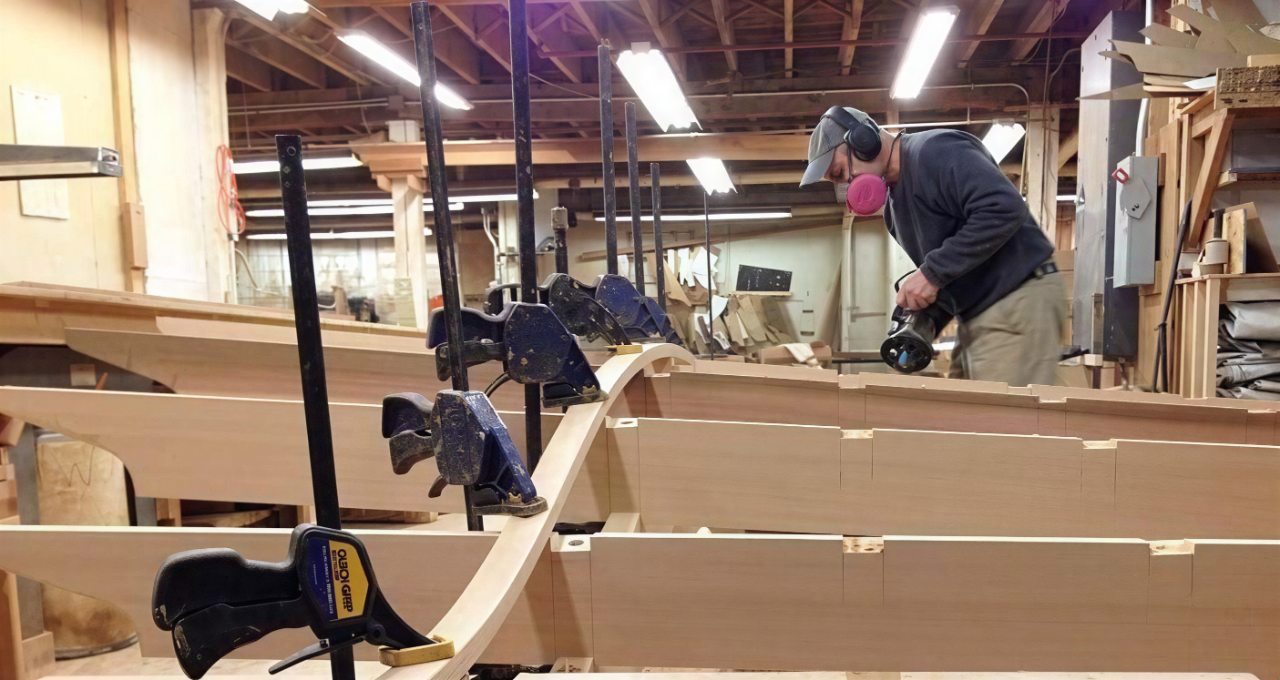
Milling cellular PVC generates plastic particulate with significantly more static charge than wood dust. On a small job, manageable. On any serious CNC or custom routing work, it creates a containment problem that most shops underestimate. That particulate does not stay in the shop.
More practically: the moment you sand cellular PVC to achieve a custom shape, you destroy the factory finish. The sanded surface becomes porous and must be painted to look uniform. Your client has now purchased a "maintenance-free" material that requires paint for the rest of its life. Unlike cedar, which weathers into a stable gray patina if left alone, a painted PVC structure has no exit from that maintenance cycle.
At end of life, there is no graceful exit from the landfill either. A cedar structure that has done its job will decompose and return something to the soil it stood in. A PVC structure pulled out in forty years will persist in a landfill for centuries. In a garden, which is a living, evolving system, that tends to be the wrong bargain for a client who is thinking seriously about the landscape they are building.
I am not a wood fundamentalist. Composite decking makes practical sense for horizontal high-traffic surfaces. And there are wood technologies and processing techniques we are actively evaluating in our shop that I think will expand what this material can do. It is early work and I am not ready to say more than that.
What I can say is that until a synthetic alternative can match the structural integrity, the fabrication behavior, and the natural lifecycle of the materials we work with, we will keep building with wood. That is not a marketing position. It is a conclusion I keep arriving at every time I look carefully at the alternatives.
If you are a landscape architect, designer, or homeowner considering a custom garden structure and want to talk through material options for your specific site and climate, reach out to us directly. We are happy to consult on species selection, finish strategies, and structural design, whether or not you end up working with us.
Browse our full collection of handcrafted cedar pergolas, arbors, trellises, arches, and gates.
Shop Our Collection