 Trellis Structures
Why we source the way we do, what's changing in the supply chain, and what that means for the structures we build.
Since 1995, Trellis Structures has built primarily with clear western red cedar. Tight-grained, largely knot-free, milled from old-growth and old-second-growth Pacific Northwest timber. It is the material our joinery was designed around, the material our finishing recommendations assume, and the material that has earned thirty years of performance data in New England gardens.
Clear cedar is genuinely exceptional. The grain runs tight, the natural oils that resist rot are concentrated in the heartwood, and left completely unfinished it weathers into a stable silver-gray patina that most customers come to prefer over time. No stain required. No sealant required. The wood does what it was grown to do.
Left unfinished, a properly built clear cedar structure will weather into something better-looking than it started. And it will do it for decades without intervention.
The supply chain for clear cedar at post and beam dimensions has tightened considerably over the past several years, and the trend is not reversing. The old-growth and mature second-growth stands that produced the clearest, most consistent timber have been heavily harvested. What remains is increasingly directed toward export markets, particularly Japan, where vertical grain cedar commands a significant premium, leaving domestic availability compressed at exactly the dimensions we need for structural work.
The result is higher cost and less predictable availability. A 4x4 post in clear grade now costs more than twice what it cost a few years ago. For a structure with a full complement of posts, beams, and rails, that adds up to a meaningful material cost difference. One we could not absorb without either raising prices significantly or offering an alternative.
We did both.
Our catalog now offers two grade tiers. What follows is an honest account of what each means and how we source them.
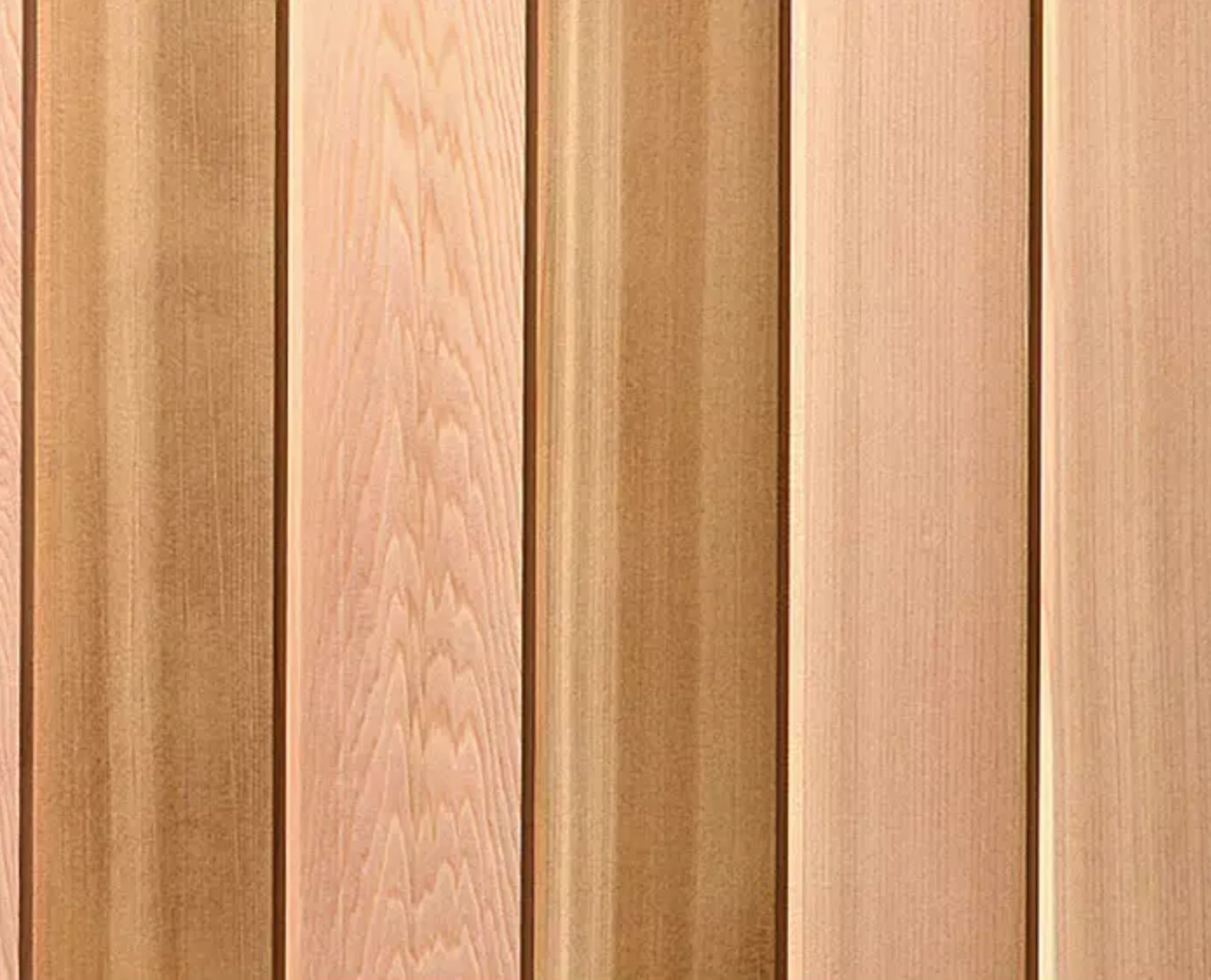
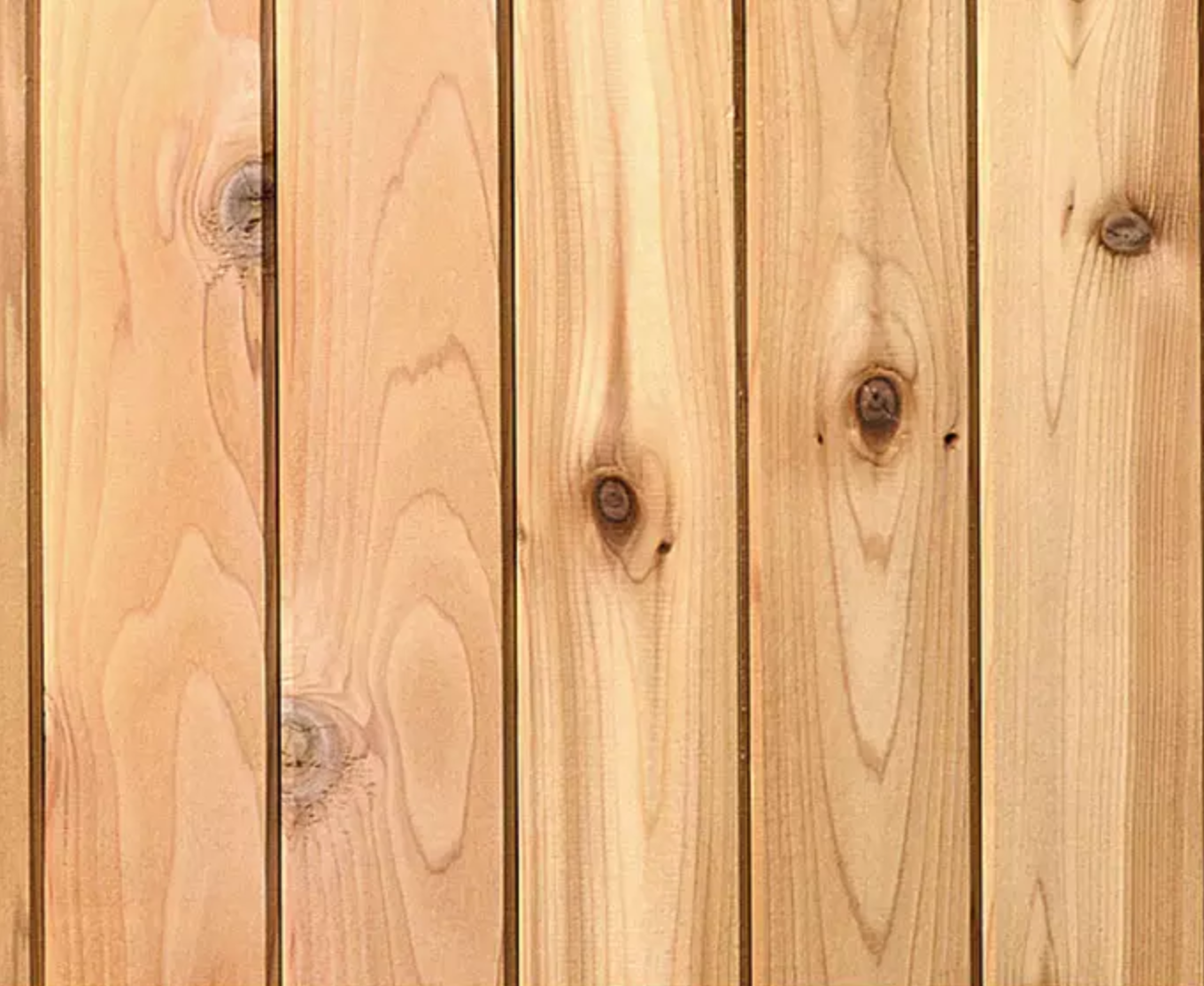
The same natural oils that give clear cedar its rot resistance are present in knotty cedar regardless of grade. The same species, the same preservative chemistry, the same fundamental durability. What changes is appearance and how the wood ages without a finish.
Clear cedar ages the way old wood is supposed to age. The grain is tight and regular, the knots absent, and the natural oils distributed evenly through the face. Left completely unfinished, it checks very little, weathers slowly, and arrives at that silver-gray patina without drama.
Knotty cedar is a different conversation. Not a worse one, just an honest one. Where the grain shifts around a knot, the wood expands and contracts differently with seasonal moisture changes. Over time, without a finish, that movement tends to produce surface checks: small cracks along the grain and around the knots. They are not structurally meaningful. Outdoor structures have been checking and cracking for centuries and standing for decades afterward. But if you want the surface to stay tight, an opaque or semi-opaque stain seals it and limits the movement significantly.
Wood is a natural material. There are no guarantees for exactly how it will age, the same way there are no guarantees for how any living thing weathers over time. What we can tell you is that properly finished knotty cedar, built to the same joinery standard as our select grade work, will perform well in the garden for a long time.
Western red cedar is not the only answer to the question of what a long-lived, rot-resistant garden structure can be made from. We have been researching alternative species and material treatments, some of them grown much closer to our shop, that we believe can meet or exceed the performance standard of Pacific Northwest cedar without the supply chain exposure. That work is ongoing and not ready to discuss publicly. When it is, it will be here first.
If you want to understand more about why we work with wood specifically and why we think the case for it is stronger than the industry currently makes, read our full piece on materials and craft.
Why wood outlasts the alternatives, and why we keep building with it.
Why Wood → Shop Our Collection